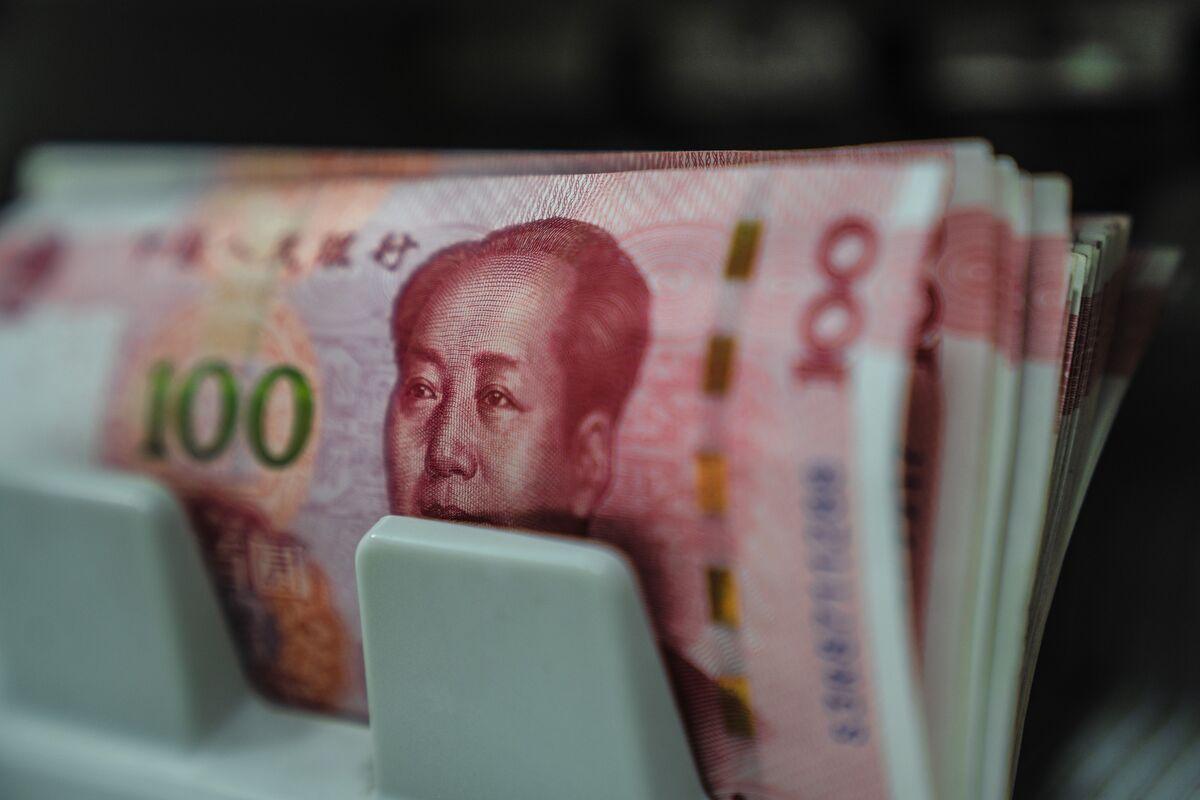
Yuan Bond Listings Overtake US Dollar Sales in Hong Kong for First Time
Offshore yuan bond issuance in Hong Kong has surpassed US dollar-denominated debt for the first time, with 342 billion yuan raised in the first ten months of 2026 as Beijing pushes the currency's global role.
Hong Kong skyline and Victoria Harbour · Source: Lam Yik/Bloomberg
Hong Kong's offshore yuan bond market has reached a milestone. Issuance of debt denominated in offshore yuan, commonly known as dim sum bonds, has overtaken US dollar-denominated sales on the city's exchange for the first time, a shift that underscores Hong Kong's deepening role as the world's leading offshore yuan hub.
According to data from Hong Kong Exchanges and Clearing cited by Bloomberg, dim sum bond issuance climbed to 342 billion yuan, or about $51 billion, in the first ten months of 2026. That represented 42 percent of all listed bond issuance in Hong Kong, the single largest share of the market. US dollar bonds accounted for 30 percent, Hong Kong dollar bonds 16 percent, and other currencies 12 percent.
The offshore yuan also led by deal volume. There were 109 dim sum bond issuances listed on HKEX during the period, compared with 84 in US dollars, 29 in Hong Kong dollars, and 18 in other currencies.
A maturing ecosystem
Financial Secretary Paul Chan Mo-po said Hong Kong's offshore renminbi ecosystem is now largely in place. Speaking at the launch of HKEX's first dim sum bond index, he said the tools to invest, measure performance and manage risk are all available in one market.
Investors can already trade Hong Kong stocks through yuan counters, and authorities are working to include those counters in the southbound leg of the Stock Connect scheme. In fixed income, Bond Connect facilitates cross-border investment, while Swap Connect and China Government Bond futures help investors manage interest rate risk. The new index adds a benchmark for offshore renminbi bonds listed in Hong Kong.
Beijing's push for currency globalisation
The milestone comes as China intensifies efforts to internationalise the yuan and reduce reliance on a financial architecture dominated by the US dollar. Geopolitical tensions and growing global interest in trade diversification have added urgency to those efforts.
The priorities were restated in a recent five-year blueprint from the People's Bank of China. The plan highlighted expanding the yuan's international use, developing offshore yuan markets, and strengthening cross-border payment systems as key goals.
Why issuers are choosing yuan
Hong Kong's position as the leading global offshore yuan centre gives it a natural advantage. The city handled 76 percent of global offshore yuan payments as of October, according to Swift, the international financial messaging service. The Hong Kong banking system held more than 1.13 trillion yuan in deposits as of September, the largest offshore yuan liquidity pool outside mainland China.
Matteo Giovannini, a non-resident associate fellow at the Centre for China and Globalisation and an AsiaGlobal Fellow at the University of Hong Kong, said the trend reflected the growing depth and sophistication of yuan-related activity in Hong Kong. He pointed to rising trade and investment flows with mainland China, greater demand for yuan hedging, and the expanded use of Hong Kong as a platform for international financial institutions and investors to manage their yuan exposure.
Lower funding costs attract borrowers
Chan noted that China's Ministry of Finance has issued more than 500 billion yuan worth of dim sum bonds in Hong Kong since 2009. The Hong Kong government, regional governments, and companies have also tapped the market increasingly for lower funding costs.
"With interest rates still elevated in many advanced economies, RMB funding is a cost-competitive option," Chan said. "This adds a new dimension to RMB internationalisation: the RMB is becoming a funding currency for global issuers as well as an asset for international investors."
Trading volume in the five-year China Government Bond futures, launched in Hong Kong three months ago, has already exceeded 50 billion yuan, he added.
What comes next
Mainland and Hong Kong authorities have steadily expanded cross-border financial channels, including mutual market access schemes and the dim sum bond market, to encourage wider international adoption of the Chinese currency. The latest data suggests those efforts are gaining traction, at least in Hong Kong.
The question now is whether the yuan's growing role in Hong Kong bond markets can spread more broadly. For the time being, the city remains the primary testing ground for Beijing's ambition to turn the renminbi into a true global currency.