

A widening China-Russia partnership along the Arctic's Northern Sea Route is forcing European and American security planners to decide whether what they are watching is a military threat taking shape or simply two sanctioned and sanctions-wary powers building a shipping shortcut together.
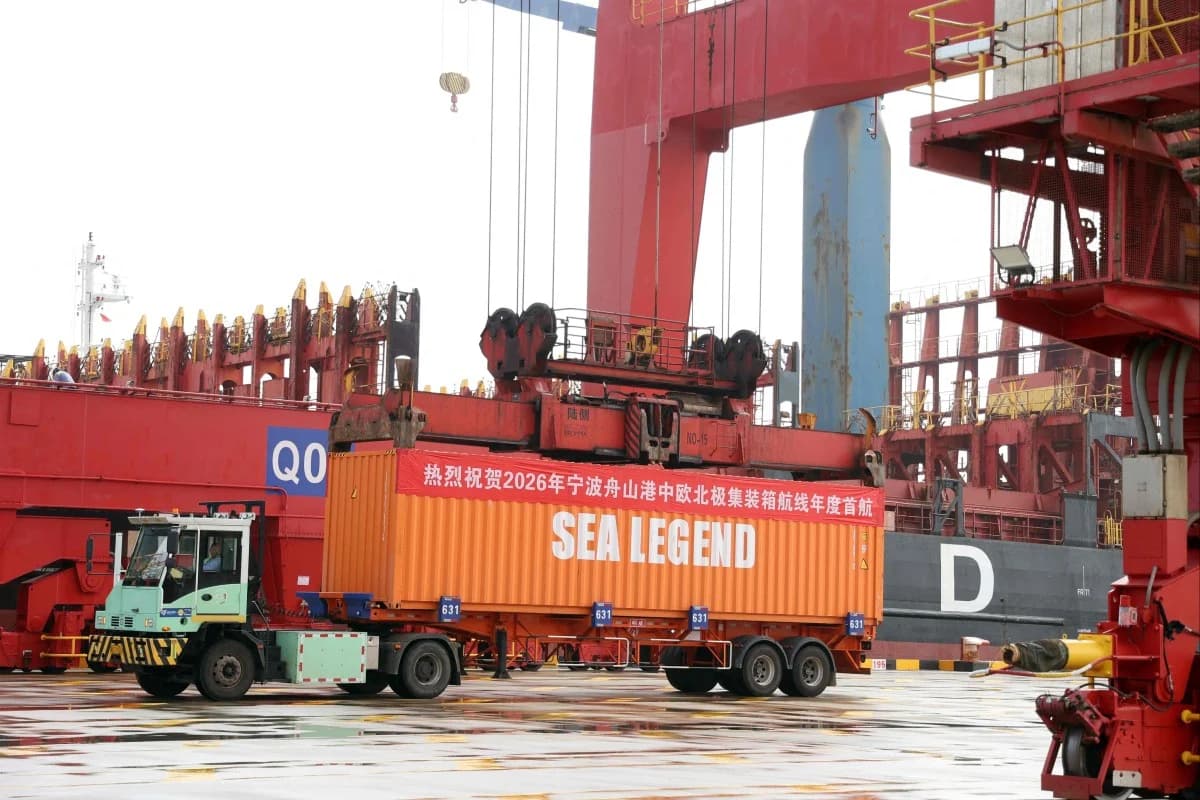
The commercial case for the route is straightforward. Ships using the Northern Sea Route along Russia's Arctic coast can cut a China-to-Europe voyage to roughly 20 to 22 days, against 30 to 40 days on the traditional path through the Strait of Hormuz, the Red Sea and the Suez Canal. The Chinese carrier Sea Legend turned that advantage into a regular service this year, running a weekly China-Europe Arctic Express between Ningbo-Zhoushan and ports including Felixstowe, Rotterdam, Hamburg and Gdynia, with eight sailings planned across the 2026 Arctic season using seven vessels. One of its ships, Dubai Tower, reached England's Teesport in September carrying Chinese batteries and energy-storage equipment after a 25-day run from China.
Behind the shipping schedule sits a deepening government-to-government relationship. Russia and China set up a joint subcommission on Northern Sea Route cooperation in 2024, and its third meeting this August produced pledges to expand shipping volumes and cooperate on navigation safety, polar shipbuilding and technology, part of what Beijing calls its Polar Silk Road. The motivations on each side are different but complementary: Russia needs the route to keep exporting under Western sanctions, while China gets a standby corridor to Europe that sidesteps the chokepoints its navy cannot defend.